Living Happiness
The 2015 Housing Act shifted Woonstad Rotterdam’s focus toward affordable housing, reducing resident engagement. Resident engagement is important for neighborhood livability, rental success, and tenant satisfaction. New complexes often face early “teething problems” that require structured support. The Malieklos, a senior social housing development, was selected as the pilot site to identify friction points, test service improvements, and design solutions that enhance residents’ living happiness.
Client:
Woonstad Rotterdam
My Role:
Lead UX & Service Designer
Tools & Methods:
User interviews, journey & process mapping, personas, concept ideation, prototyping, and usability testing
Complex challenge, flexible approach.
The assignment I received was not a clearly defined problem but rather a complex challenge. Its broad nature and the absence of a specific goal caused the focus to shift multiple times throughout my process. This required extensive research and an iterative approach. Along the way, I learned that the design process is not linear but rather multifaceted and flexible. Below, I outline the research and analyses that provided me with the most valuable insights.
Mapping the after-sales experience.
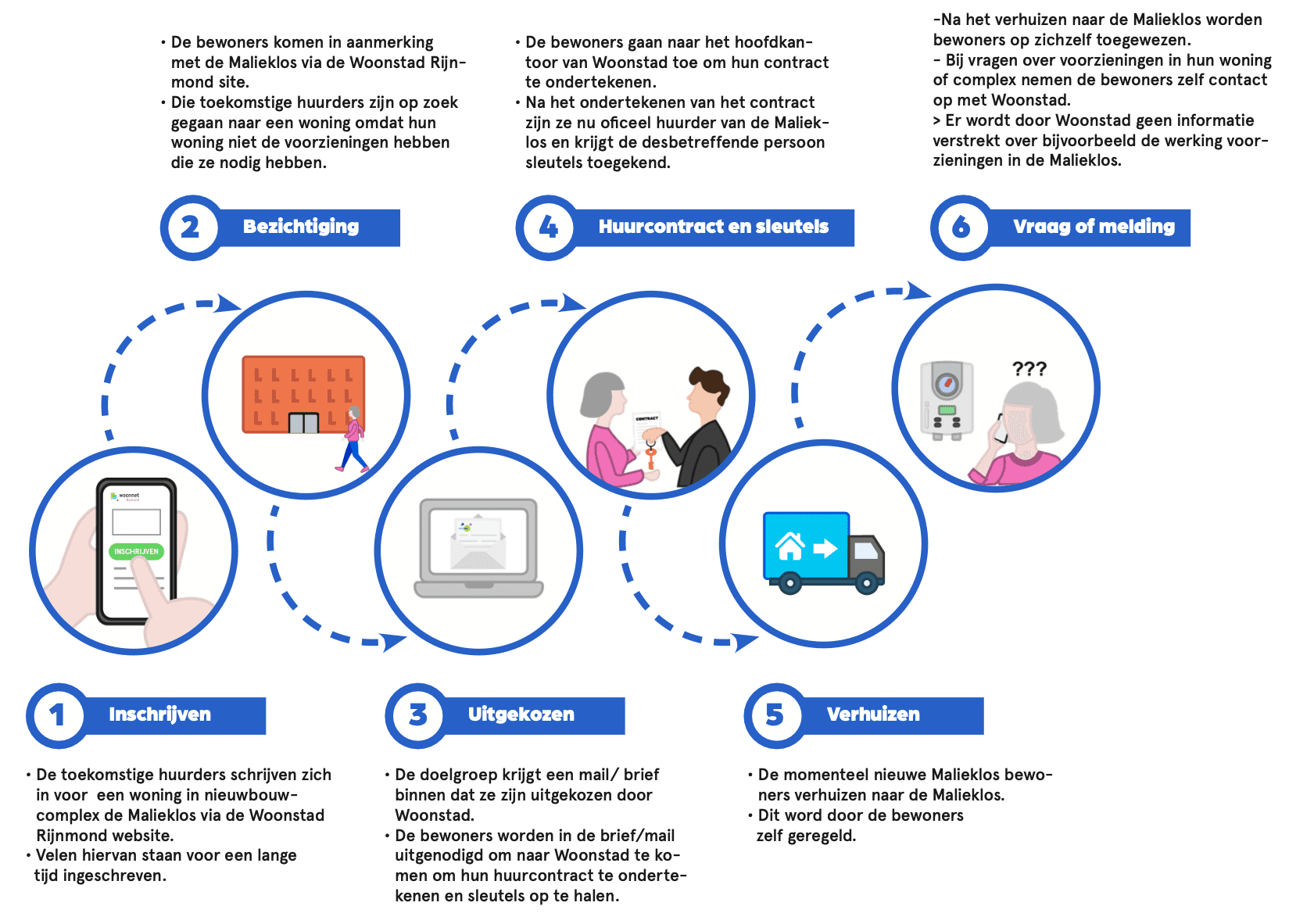
To better understand the after-sales period, I created a process map that visualizes all resident contact moments with Woonstad, both before and after signing the rental contract. The map revealed a critical gap: after signing, no structured after-sales actions are in place to ensure resident satisfaction. As a result, residents must initiate contact themselves whenever they have questions or issues, which can lead to frustration and lower engagement.
Qualitative research reveals two senior groups: those with health issues and those with a language barrier.
Before starting my research, I interviewed 20 residents of the Malieklos housing complex. Ten of these were in-depth interviews, where I explored residents’ needs and values using Schwartz’s model. I applied an ACV chain (Attributes, Consequences, Values) to translate these insights into actionable design considerations.
This qualitative study helped me gain a clear understanding of the target audience. Since no structured after-sales service exists, my personas were based on Woonstad’s general service experience. Analyzing the interviews, I identified two distinct groups of seniors: one facing health challenges and another encountering language barriers. These insights guided how I defined personas and shaped the design approach.
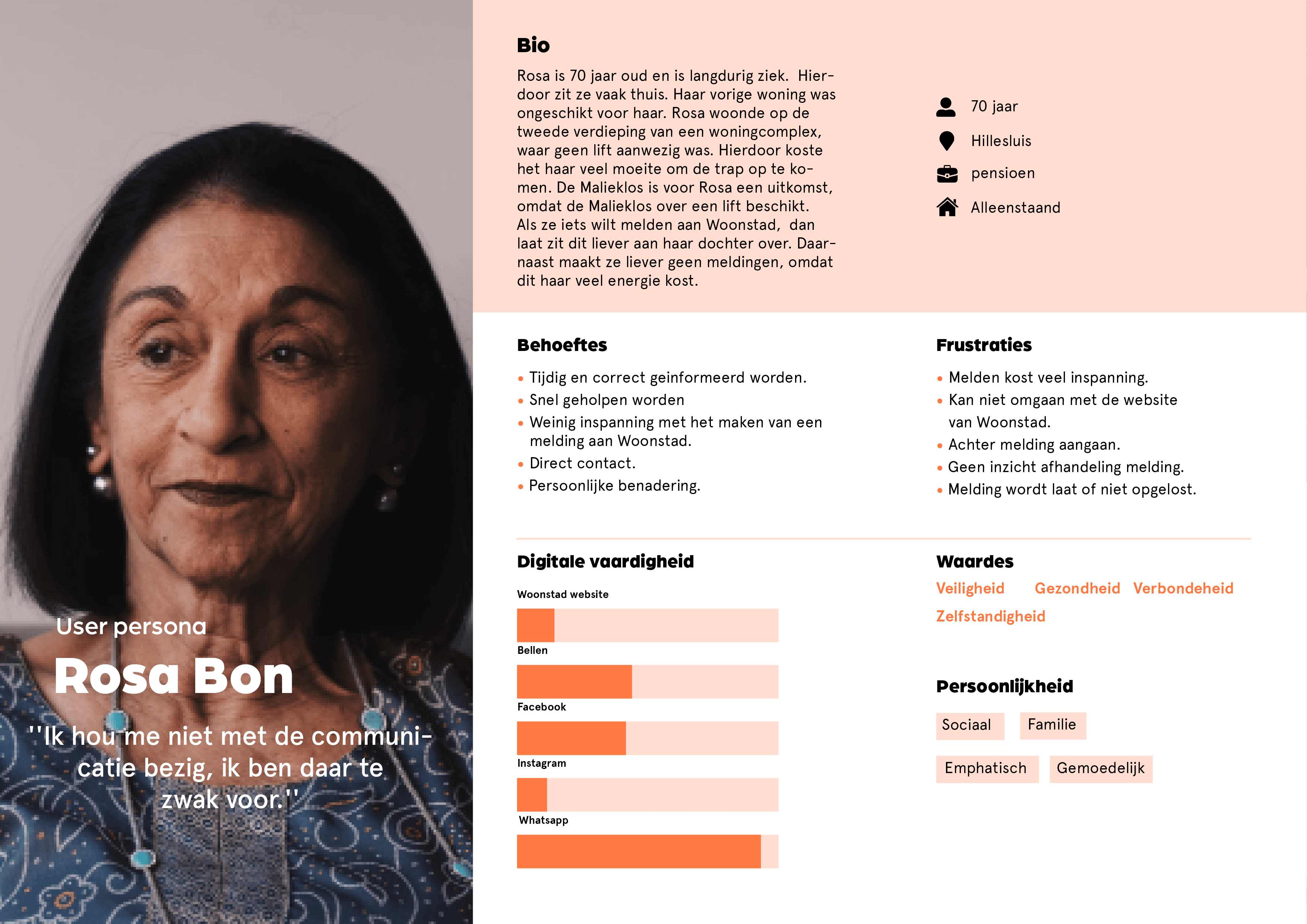
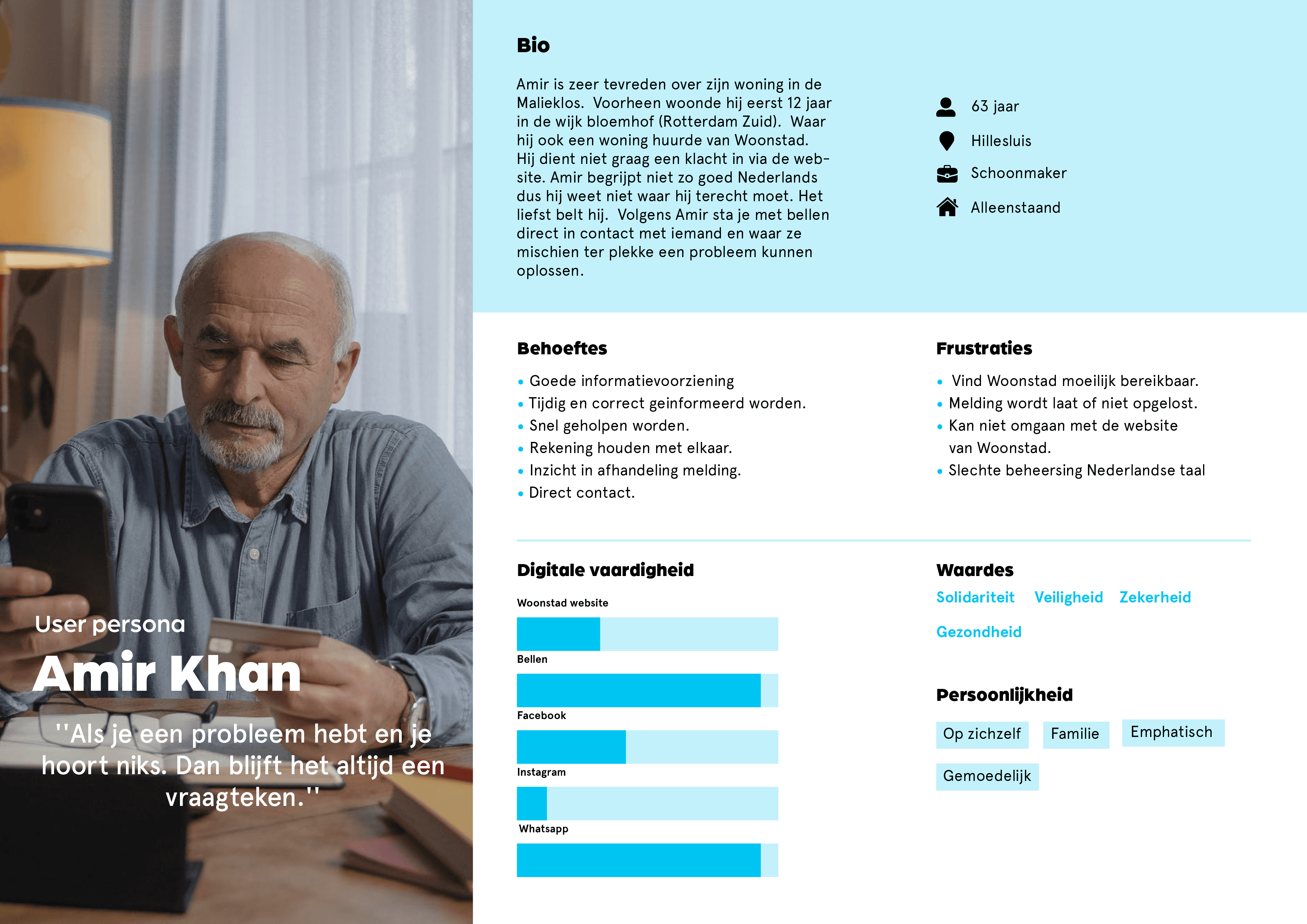
This senior moved to Malieklos because of the elevator, as mobility issues made her previous home difficult. She values safety, health, connection, and independence.
Her key needs are clear and timely information, quick assistance, and an easy way to report issues to Woonstad. She prefers direct contact and a personal approach.
Currently, she struggles with Woonstad’s website, has no visibility into how her reports are handled, and often has to follow up herself. Delays or unresolved issues frequently cause frustration.
Digitally, she prefers WhatsApp, followed by phone calls and Facebook.
The second large group consists of seniors with a migration background who have limited Dutch language skills. This makes it difficult for them to use the Woonstad website and submit complaints. They prefer direct phone contact for quick solutions.
What matters most to them is clear information, timely assistance, insight into the status of their reports, and direct contact. They are frustrated when Woonstad is hard to reach, reports are delayed or unresolved, or their language skills make communication difficult.
They primarily use WhatsApp, followed by phone calls and Facebook. They value solidarity, safety, security, and health.
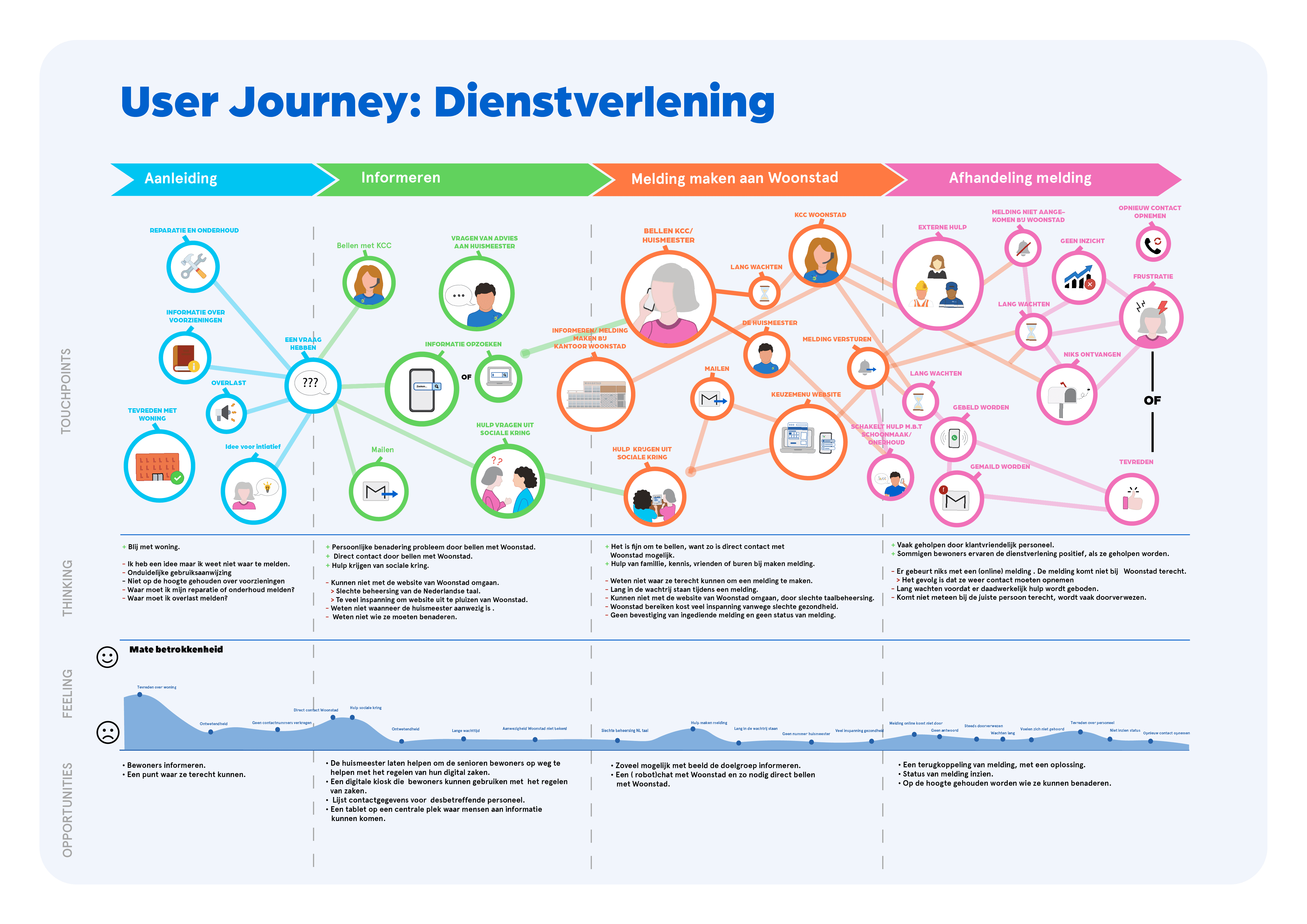
Resident engagement drops due to unclear information, delays, ignored concerns and high barriers.
The after-sales service is combined with the regular service, leaving residents to take the initiative. I mapped the regular service process to visualize stakeholders and uncover gaps in Woonstad Rotterdam’s support. The journey also highlights why residents often feel less engaged.
The main insight is that resident engagement decreases until their issues are resolved. This is caused by:
• A lack of clear information.
• Long waiting times or no response.
• Residents feeling their concerns are not taken seriously.
• A high perceived barrier to seeking help.
Guidelines to ensure the design meets users' needs.
Additionally, based on my research, I have developed guidelines to ensure that my design meets the users' needs:
1.Provide appreciation.
2. Give control over the situation.
3.Offer safety.
4.Provide a personalized approach.
5.Remove language barriers.
I developed and tested three concepts, applying design guidelines, and presented them.
I led multiple brainstorming sessions, which resulted in three concepts. Throughout the process, I applied design guidelines using a Harris profile to ensure alignment with best practices. I then tested the concepts with the target audience and presented the findings to the client.
The three concepts are:
Woonstad Loket: Woonstad Loket provides quick assistance through an integrated chatbot that searches for solutions and gives residents insight into progress. It delivers step-by-step guidance, removes language barriers through visual aids, and promotes self-sufficiency while still allowing direct contact when needed.
Woonstad Community: This concept enables Malieklos residents to request help from both fellow residents and Woonstad. It focuses on direct contact, collaboration, and fostering a pleasant living environment. The app ensures anonymity for safety and keeps residents informed about their surroundings, including neighborhood activities.
Woonstad Wensbox: Woonstad Wensbox allows residents to share wishes with neighbors and Woonstad. Residents can help each other by fulfilling these wishes, such as improving public spaces. The concept guides residents through suggested steps to address complaints and needs, with a focus on overcoming language barriers.
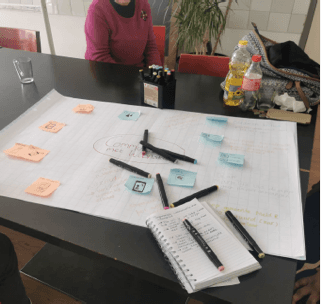
I tested concepts using Positive Design Sheet to assess which best aligns with the target audience's living happiness.
To determine which concept best supports the target audience’s living happiness, I first explored effective ways to measure it. During my research, I discovered the Positive Design Sheet from TU Delft, a method that lets respondents express their experience with a service through facial expressions.
I applied this tool during concept testing to understand how residents perceived each idea and which one generated the most positive emotions. This approach provided clear insights into which concept had the strongest impact on living happiness. The test was conducted on Maze and all concepts were developed as low-fidelity prototypes in Figma.
From the concept test, three key insights emerged:
The Woonstad Community concept evoked the most positive feelings among the target audience.
Respondents emphasized the importance of protecting their personal data.
The ability to track the progress of submitted reports was highly valued.
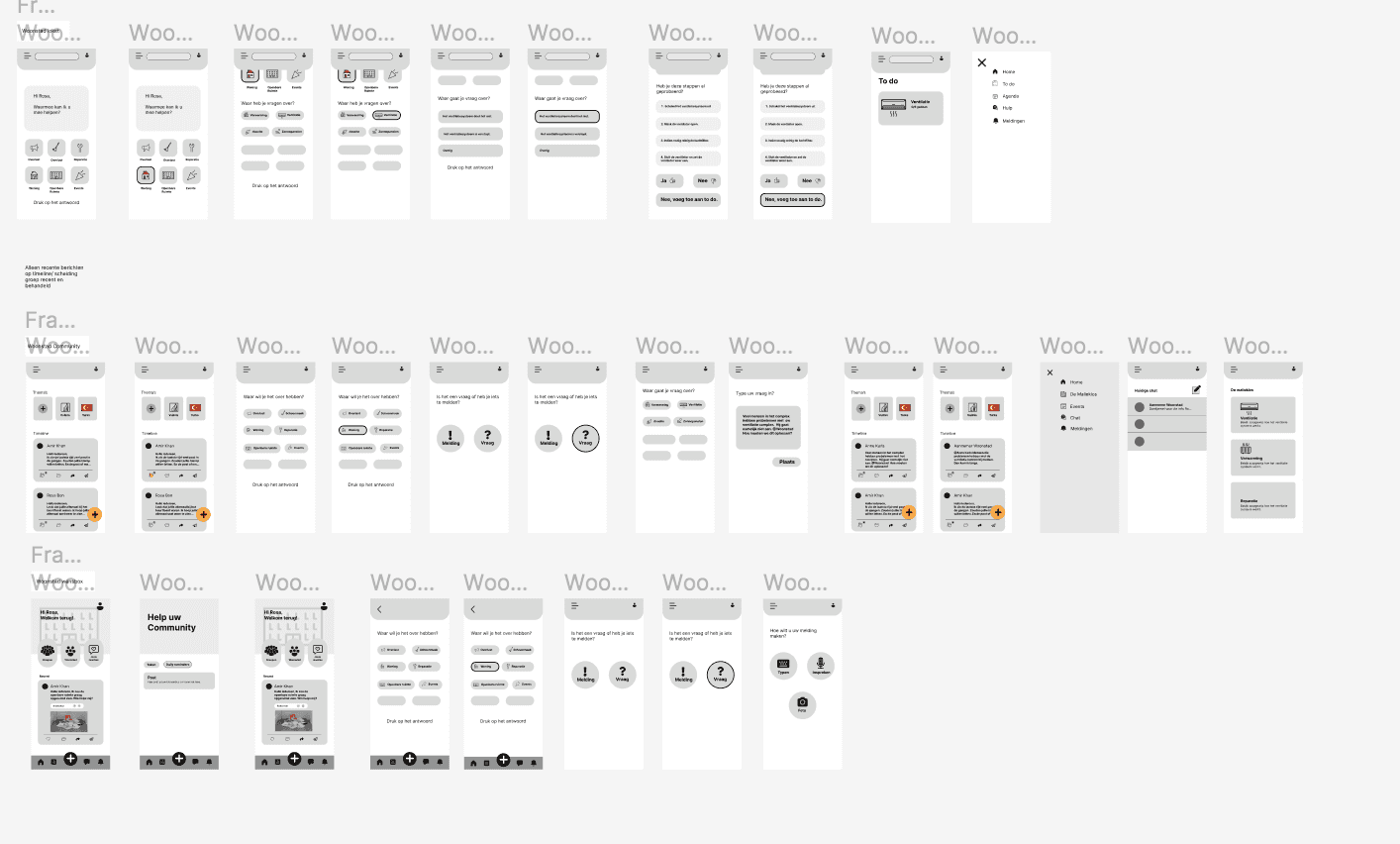
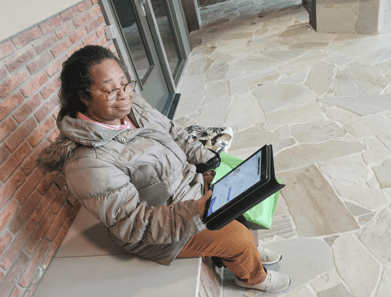
The Woonstad Community concept emerged from usability testing and was refined through iteration.
Based on insights from the client, stakeholders, and the target audience, I selected the Woonstad Community concept as the most promising direction. I iteratively refined the prototype through user testing, focusing on clarity of language, iconography, and overall comprehensibility for residents. To ensure a coherent and trustworthy experience, the app was aligned with Woonstad Rotterdam’s style guide and existing brand principles.
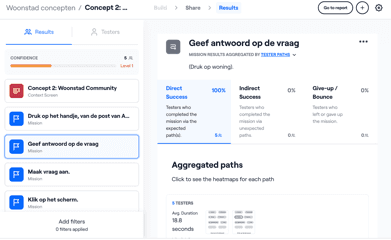
conducted a remote usability test with five participants from the target group using Maze, allowing them to explore the app independently. After completing the tasks, participants filled out a short survey to evaluate their willingness to use the app and their overall understanding of the concept.
Key findings:
• Respondents are willing to use the app.
• The lack of a current initiative from Woonstad caused skepticism.
• The app's purpose and usage need clearer communication.
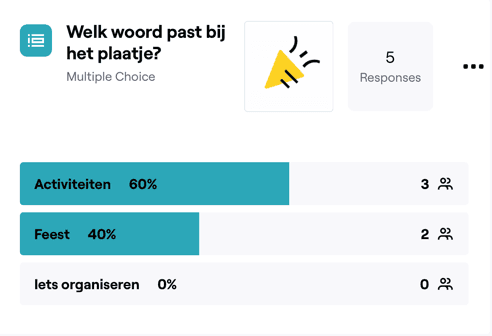
A language barrier was identified during my research, so I tested the app’s language design and iconography with Malieklos residents. The sessions showed how language affects usability and how icons and visual cues can help residents understand and use the app independently.
Key insights:
• Residents appreciate icons for conveying meaning quickly.
• Language remains a challenge, but progress has been made toward accessibility.
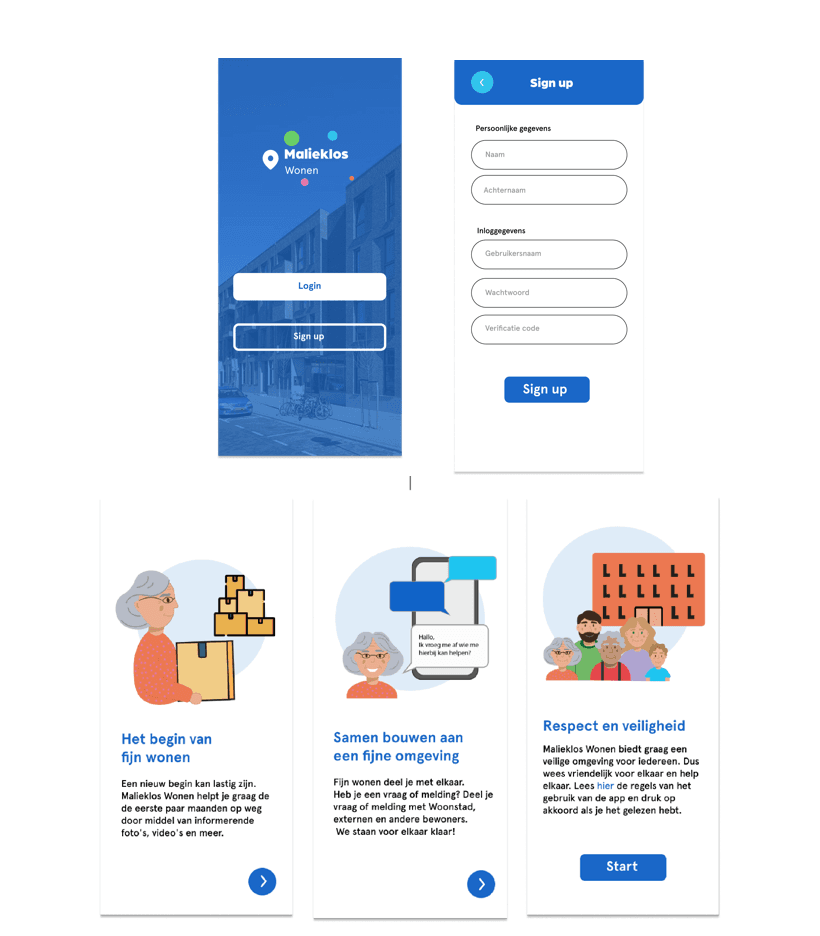
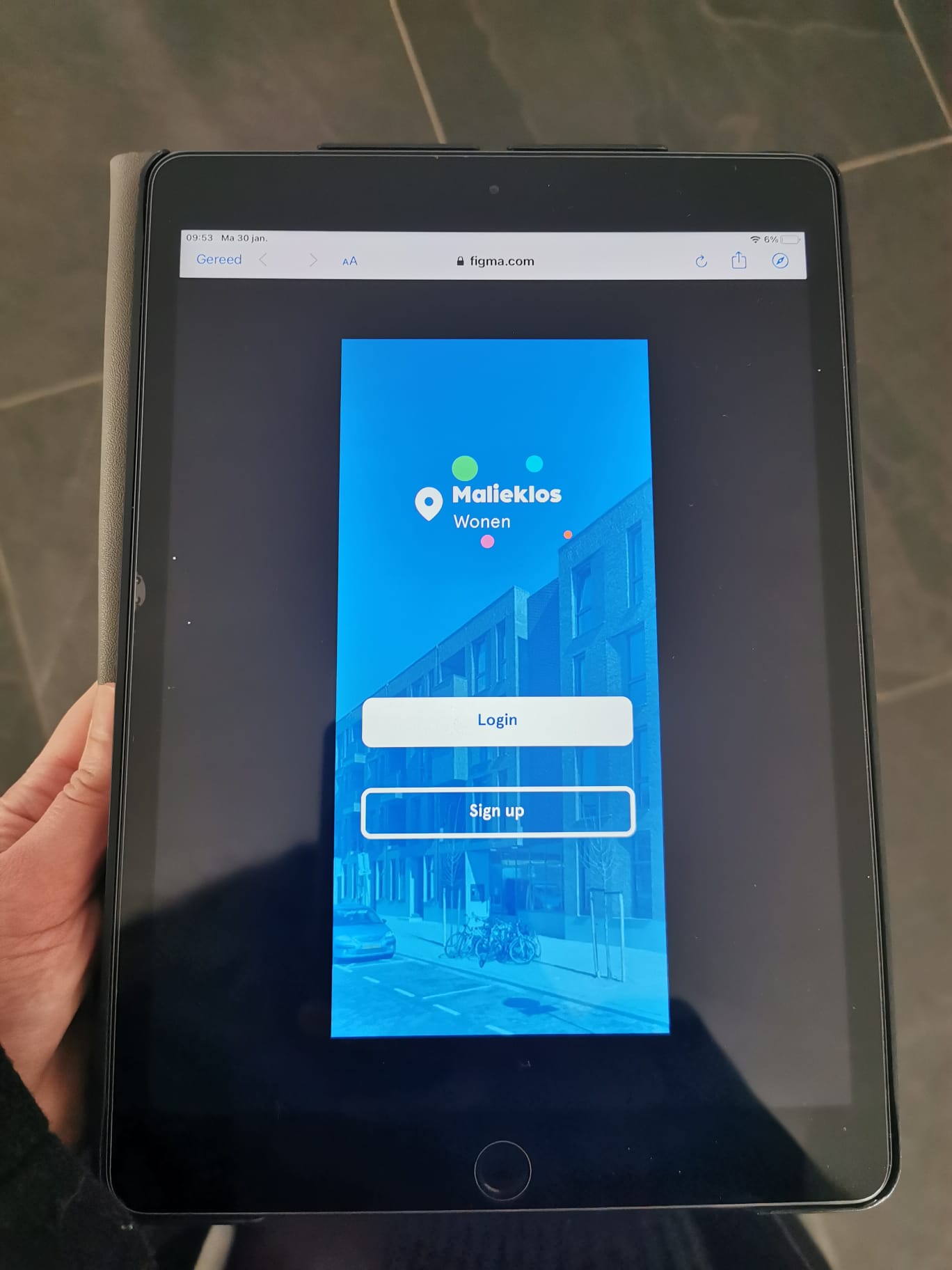
Based on the findings from the first test, which focused on the app’s clarity and understandability, I created onboarding screens to clearly communicate the app’s purpose. In this final test, I evaluated these screens along with the rest of the app to ensure the concept was easy to understand and use for residents.
Key insights:
• The app's purpose is clear to respondents.
• The barrier to posting anonymous messages is removed.
• Residents see the app's benefits and are eager to participate.
Malieklos Wonen: a central after-sales service for residents.
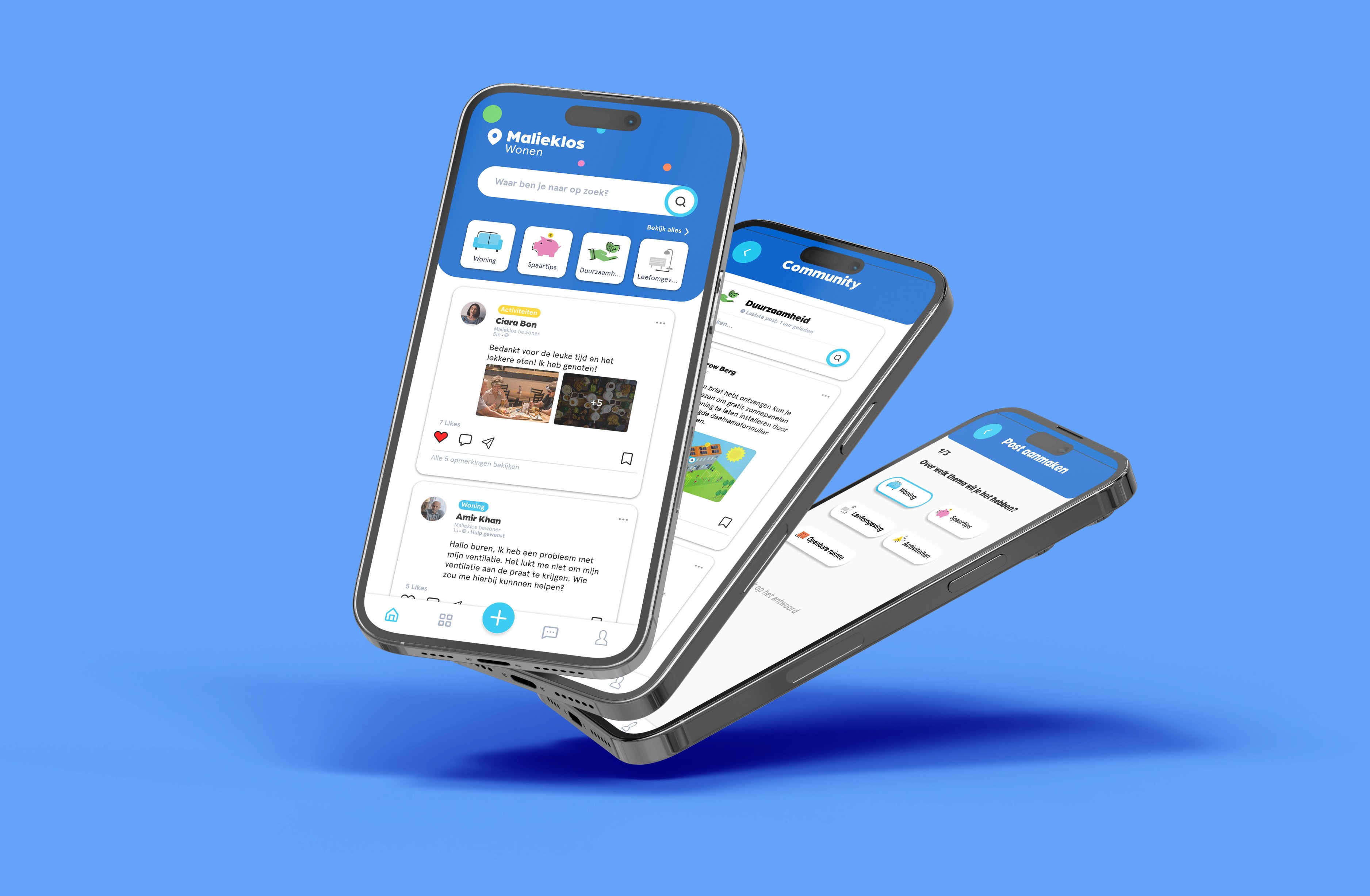
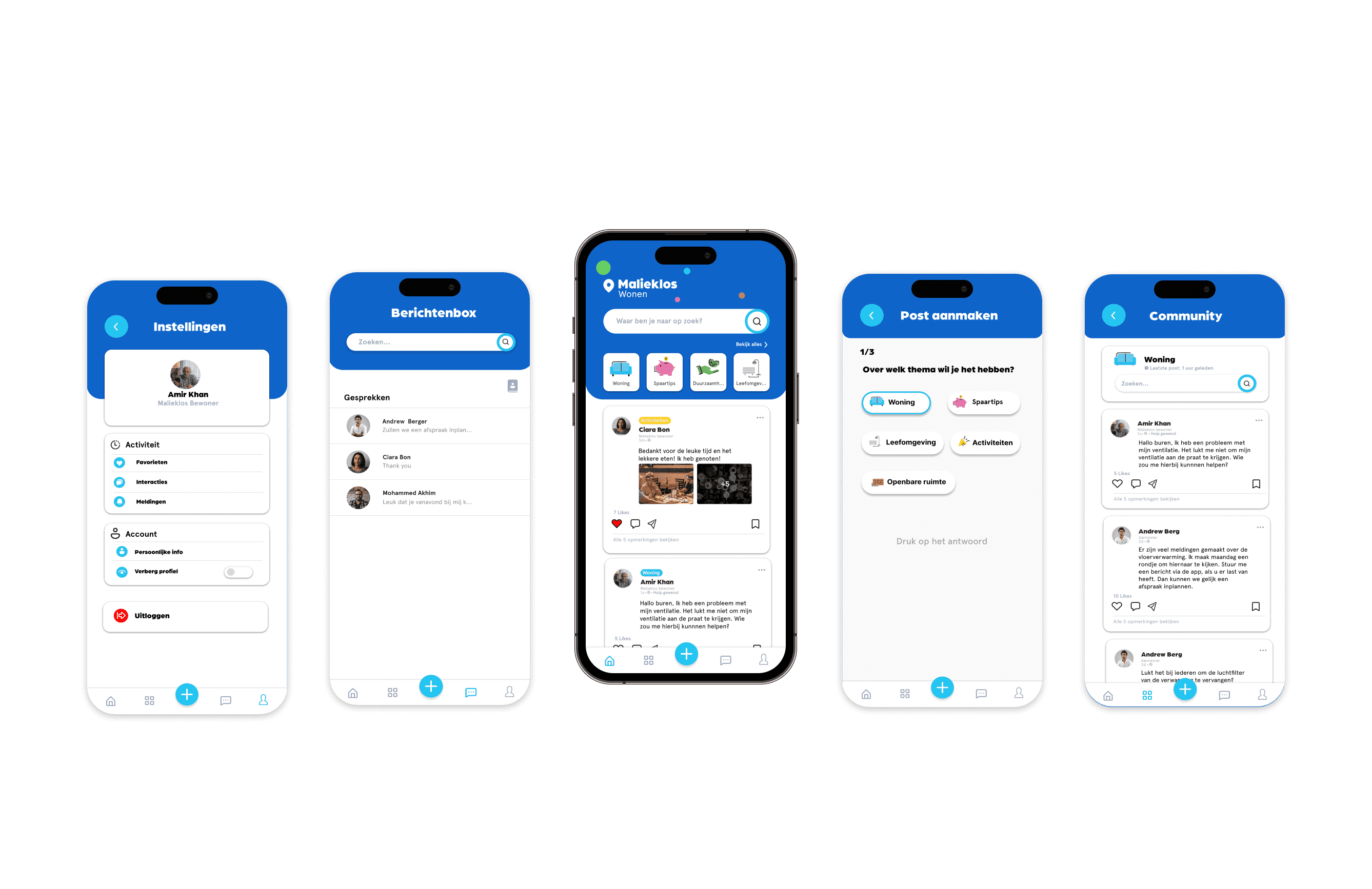
Together with the client, the concept was renamed Malieklos Wonen. Based on research, user testing, and design guidelines, Malieklos Wonen was developed as a central information hub for residents of the Malieklos complex. The app is particularly valuable during the initial period after moving in, when residents often have many questions and uncertainties.
In addition, the app functions as a communication platform where residents can report questions or issues in a clear and accessible way. The design follows Woonstad Rotterdam’s style guide to ensure visual consistency and a familiar experience. The overall goal is to support residents’ well-being by providing reliable information and creating a safe space where they can share concerns and feel heard.
Looking ahead: scalability and iteration.
Woonstad Rotterdam intends to implement the app concept in future residential complexes during the after-sales period. Although initially designed for new housing, the concept is scalable and could evolve into a long-term communication platform for residents across multiple complexes.
To assess its long-term value, I recommend testing the app over an extended period to evaluate engagement, effectiveness, and relevance for different resident groups.
Beyond delivering a concrete solution, this project strengthened my approach as a designer. It emphasized the importance of clear problem framing and reinforced the iterative nature of the design process. These insights will guide my future projects and ongoing development as a digital designe